INQUIRY
Leave Your Message
0%

Choosing the right Isolation Inductor can actually be pretty overwhelming at first glance. There are so many types and specs out there, it’s easy to get lost in the details. Honestly, the key is to focus on what you really need for your specific application. For instance, are you after good performance at low frequencies, or do you need that high-frequency reliability? Each option you pick will lead to different results, so it’s worth thinking about that carefully.

Isolation Inductors are super important when it comes to power supplies and keeping signals clean. They help block out noise and keep circuits isolated, which is a big deal. But if you choose the wrong one, it can actually cause more trouble than it solves. You might end up with an inductor that just doesn’t quite do the job or meet your expectations.

As you’re looking through your options, take a moment to really think about how you're making your decision. Are you leaning more towards saving a buck, or are you willing to spend a bit more for better performance? That’s a common trap—going cheap might backfire in the long run. Finding the perfect Isolation Inductor isn’t just about technical specs; it’s also about your big-picture goals. Step back, weigh your options, and you’ll end up making a smarter, more informed choice.
Isolation Inductor Tips for Choosing the Right One?

Understanding Isolation Inductors: Definition and Purpose

Isolation Inductors play a crucial role in electrical engineering. They provide a barrier between circuits, limiting noise and ensuring stability. Their primary purpose is to reduce voltage spikes and protect sensitive components. By isolating different parts of a circuit, these inductors enhance performance.

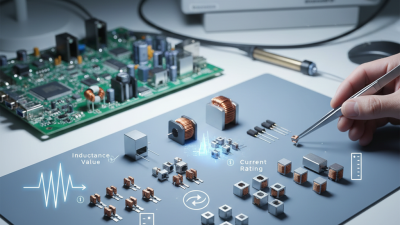
Choosing the right Isolation Inductor can be confusing. Factors such as inductance value and current rating are important. Not every inductor fits every application. The physical size and mounting type also matter. Too often, people overlook these details. It’s common to prioritize price over quality, leading to potential failures.

Installation mistakes can expose the circuit to unwanted interference. Proper orientation and placement are vital for effectiveness. Sometimes, a lengthy process is worth it for a good outcome. Reflecting on past choices can help in making better decisions. Understanding these elements can lead to more reliable and efficient designs.

Key Factors to Consider When Selecting Isolation Inductors

Choosing the right Isolation Inductorcan significantly impact the performance of your electrical systems. When selecting Isolation Inductors, several key factors should be prioritized.Inductor ratings and core materials play a vital role in determining efficiency. High-frequency applications often require ferrite cores, while lower frequencies may benefit from iron cores.

Tip: Consider the current carrying capability. It’s crucial to choose an inductor that can handle peak currents without overheating. According to industry analyses, proper thermal management can increase inductor lifespan by up to 200%.

Magnetizing inductance is another important aspect. The inductor's ability to resist magnetic saturation directly affects your system's stability. Research indicates a 5%-10% reduction in efficiency can occur if the inductor saturates during operation. Hence, ensure the inductor is appropriately rated for the application's specific conditions.

Tip: Evaluate the physical size and mounting type of the inductor. Space constraints can limit your options. Opting for a compact design may sometimes lead to compromising rate performance. Find a balance that suits your project needs while not sacrificing quality for size.

Types of Isolation Inductors and Their Applications

When choosing Isolation Inductors, it's essential to consider their types and applications. Isolation Inductors are crucial in various electrical circuits. They help in reducing electromagnetic interference and ensuring better performance. There are different types to explore. Each type serves a unique purpose.

One common type is the shielded inductor. These are designed to minimize noise and crosstalk in sensitive applications. You might find shielded inductors in audio equipment or communication devices. They are perfect for reliable signal transmission.

Another type is the Air Core Inductor. These inductors feature no magnetic core. They are lightweight and provide higher efficiency. Often seen in high-frequency applications, they are great where power loss needs to be minimized.

When choosing the right Isolation Inductor, pay attention to the inductance value. This value influences the circuit performance. Consider the DC resistance as well. A lower resistance often means better efficiency. Ensure to evaluate your specific application requirements. This is often overlooked but can significantly impact functionality.

Evaluating the Electrical Specifications of Isolation Inductors

When selecting isolation inductors, the electrical specifications are paramount. Consider the inductance value first. It affects filtering and energy storage capabilities. A higher inductance means better performance in noise suppression. However, it could also lead to larger physical sizes. Striking a balance is crucial.

Next, look at current ratings. This figure indicates the maximum current the inductor can handle without overheating. Choosing a part with a low current rating may lead to failure. Thermal management is another critical aspect. Inductors can generate heat under load, impacting efficiency.

Frequency response is an important factor as well. Isolation inductors should perform well across the desired frequency range. Evaluate the quality factor (Q) to understand the energy losses during operation. A lower Q factor may point to potential inefficiencies. Keep in mind that real-world applications often require compromises. Each specification may not meet all needs perfectly. Balancing these considerations can feel daunting.

Isolation Inductor Tips for Choosing the Right One

Parameter Description Typical Values Importance
Inductance Value The inductance provides a measure of the inductor's ability to store energy. 1µH - 10mH Critical for selecting the right inductor for circuit performance.
Current Rating Maximum continuous current that can pass through the inductor. 100mA - 10A Ensures the inductor operates within safe limits without overheating.
DC Resistance (DCR) Resistance of the inductor at DC, affecting efficiency and heat generation. 50mΩ - 500Ω Lower DCR is preferred for higher efficiency.
Saturation Current Current level where the inductor no longer linearly increases inductance. 150mA - 20A Ensures inductor functionality under maximum load conditions.
Temperature Rating Maximum operating temperature; affects reliability and lifespan. -40°C to 125°C Higher ratings are preferable for high-temperature environments.

Impact of Core Material on Isolation Inductor Performance

Isolation Inductor Tips for Choosing the Right One?

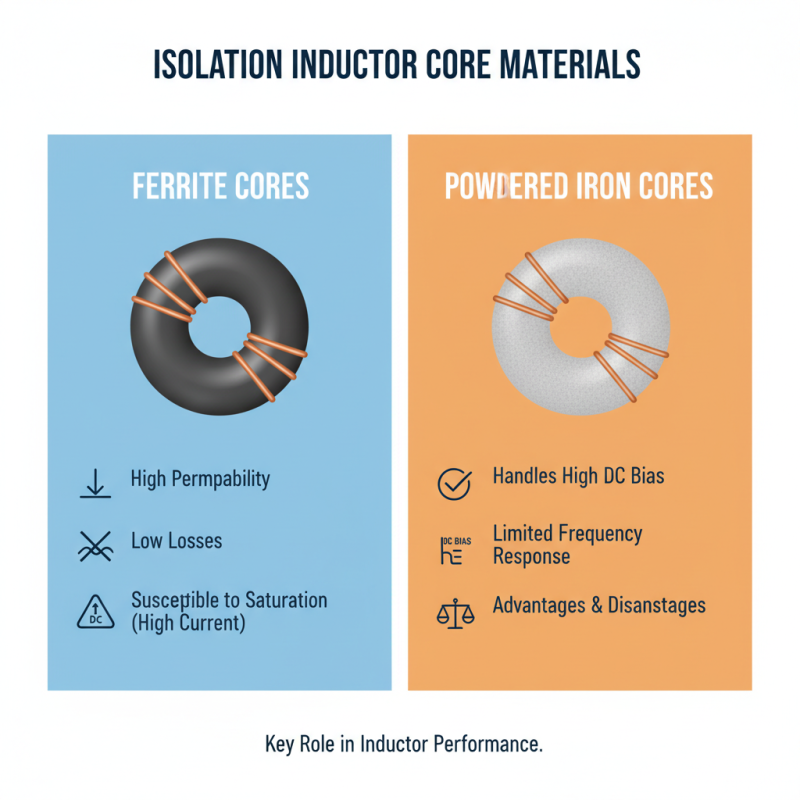
When selecting an isolation inductor, core material plays a crucial role. Different materials yield varied magnetic properties. Ferrite cores are popular for their high permeability and low losses. However, they can saturate quickly under high currents. This could lead to performance issues. On the other hand, powdered iron cores handle high DC bias well. But their frequency response may not be as good. Each choice has advantages and disadvantages.

The core material affects not just efficiency but also thermal management. Some core types generate more heat during operation. This can impact overall reliability. Consideration of cooling methods might be necessary. In certain applications, the Rf Isolation Transformer becomes essential for managing signal integrity. A poor choice of core could lead to degraded performance and unexpected failures. It's important to keep performance metrics in mind, as well as environmental factors. Materials interact differently with various frequencies, which can complicate decisions.

Finding the right balance between core material and application needs is often challenging. Users must weigh efficiency against thermal performance. This decision-making process can be frustrating. Testing different configurations and measuring real-world performance can help validate choices. Each scenario brings unique challenges, requiring iterations and refinements. Trusting in a single solution may not yield the best outcomes. Creative experimentation with different materials might lead to unexpected improvements.

Common Mistakes to Avoid in Choosing Isolation Inductors

Isolation Inductor Tips for Choosing the Right One?

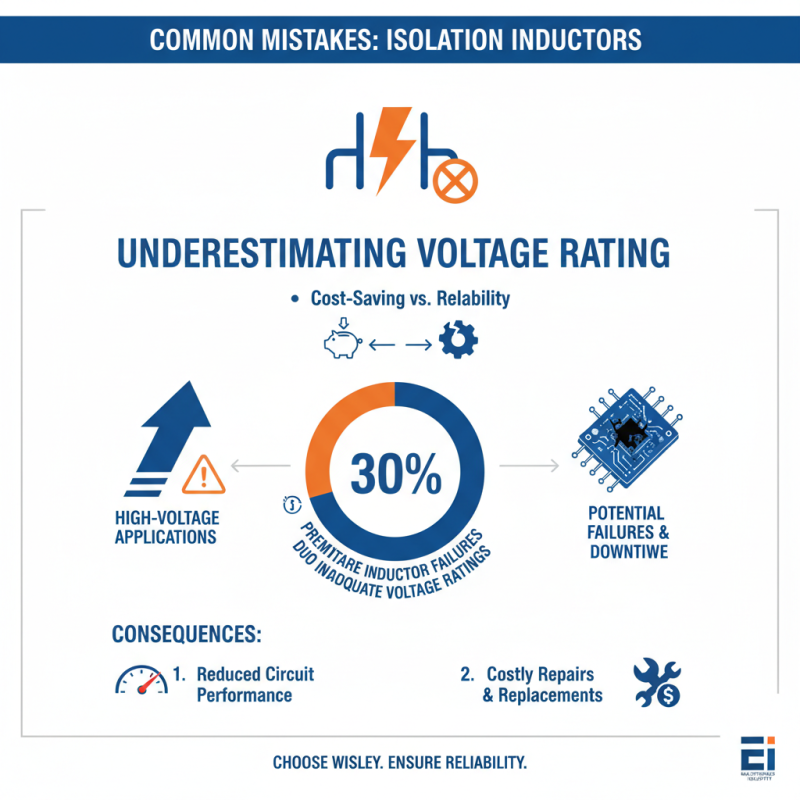
Choosing the right isolation inductor is crucial for enhancing circuit performance. A common mistake is underestimating the inductor's voltage rating. Many engineers opt for lower-rated inductors to save costs. However, this can lead to potential failures, especially in high-voltage applications. According to industry reports, 30% of premature inductor failures are linked to inadequate voltage ratings. This oversight can result in costly downtime.

Another frequent error is neglecting inductance value. Some may believe that higher inductance always equates to better isolation. This is misleading. The right inductor must match the application requirements precisely. Overestimating inductance can lead to power losses and poor efficiency. The ideal choice involves achieving a balance between inductance and performance.

Lastly, choosing components without considering thermal performance is a mistake. Isolation inductors generate heat; inadequate heat management can affect reliability. Studies reveal that 40% of inductor issues stem from overheating problems. It's essential to check the thermal characteristics and package specifications. Aim for components designed for 1:1 High Isolation Coupled configurations to ensure optimal performance and stability. Make informed choices to enhance longevity and functionality.

Best Practices for Sizing and Installing Isolation Inductors

Choosing the right isolation inductor involves careful sizing and installation. When sizing, assess your circuit's voltage and current ratings. Ensure the inductor can handle peak currents without saturation. This is crucial for performance. A common mistake is underestimating the required current rating. Always check the specifications.

Installation also plays a vital role. Position the inductor away from heat sources to prevent overheating. Ensure proper grounding to minimize noise interference. If you encounter grounding issues, re-evaluate the layout. In some cases, a Low DC resistance rod choke inductor can help in reducing power loss.

Sometimes, practical challenges arise. Finding the right balance between size and performance can be tricky. Larger inductors may offer better performance but occupy more space. Consistently verify the inductor's temperature during operation. Regular monitoring can prevent potential failures. Being aware of these aspects can lead to better decision-making.

Isolation Inductor Selection: Key Parameters and Values

Optimizing Energy Efficiency: The Role of EPE3225 Series Molding Power Inductors in Modern Power Management Systems

In the realm of modern power management systems, energy efficiency has become a critical factor for performance and sustainability. The EPE3225 series molding power inductors play a pivotal role in optimizing energy consumption in various applications. Designed with features like halogen-free and ROHS compliance, these inductors ensure not only environmental safety but also high efficiency in power-related applications. With an operating temperature range of -55℃ to +125℃, they can perform reliably in diverse conditions, making them ideal for demanding environments.

The magnetically shielded construction of the EPE3225 series contributes significantly to their low electromagnetic interference (EMI), which is essential for maintaining signal integrity in sensitive electronic circuits. Their ability to handle frequencies up to 5MHz facilitates efficient energy transfer while minimizing core losses. This combination of low direct current resistance (DCR) and high current capacity allows for enhanced power efficiency, particularly in applications such as voltage regulator modules (VRMs) for servers, DC switching power supply circuits, and DC/DC converters for CPUs in notebooks and personal computers.

By integrating the EPE3225 series inductors, engineers can ensure stable power delivery in SSD modules and various other high-performance applications. The focus on energy efficiency not only supports advanced technological requirements but also aligns with the growing emphasis on sustainable practices in electronic manufacturing and design.

FAQS

: What should I consider when selecting isolation inductors?

: Focus on the inductor ratings and core materials for efficiency.

How does the inductor's current carrying capability affect performance?

It's vital for handling peak currents without overheating.

What can impact the lifespan of my isolation inductor?

Proper thermal management can increase lifespan by up to 200%.

Why is magnetizing inductance important?

It affects stability; saturation can reduce efficiency by 5%-10%.

How should I evaluate the physical size of an inductor?

Space constraints matter. A compact design may compromise performance.

What is the significance of the inductance value?

Higher inductance improves noise suppression but leads to larger sizes.

Why are current ratings key in inductor selection?

A low current rating can cause failure due to overheating.

What role does frequency response play in selecting inductors?

Isolation inductors must perform well across required frequency ranges.

How do I assess the quality factor (Q)?

A lower Q factor may indicate inefficiencies during operation.

What challenges might I face with inductor specifications?

Meeting all needs perfectly can be tough; compromises may be necessary.

Conclusion

Isolation inductors play a crucial role in electrical design by providing isolation between circuits while maintaining signal integrity. Understanding their definition and purpose is essential for selecting the right isolation inductor for specific applications. Key factors to consider include current rating, inductance value, and voltage rating which directly impact performance.

When evaluating isolation inductors, it’s important to assess electrical specifications and the effect of core materials on their efficiency. There are various types of isolation inductors tailored to different applications, each having unique characteristics. To avoid common pitfalls, one should also adhere to best practices for sizing and installation to ensure optimal functionality and reliability in their electrical systems.

Liam

Liam

Liam is a seasoned marketing professional at Zhuhai Eastever Electronic Co., Ltd., where he has dedicated over a decade to promoting advancements in passive electronic components. With an exceptional understanding of the industry, he specializes in the research, development, production, and sales......
Previous Understanding RF Transformers: Key Principles and Applications in Modern Technology